
Senior European engineers, in Paris. Your system, built under the rules your data lives by.
An independent engineering firm since 2019, for European companies and for US and UK companies that serve Europe. Three senior engineers build, host and hand over your software, automations and AI. The people you meet on the first video call are the people who do the work.
- Independent since 2019
- EU hosting by default
- Fixed fee, risk on our side

- emergency callbacks after a handover, across every engagement since 2019
- 0
- Measured in July 2026, first-party
- senior engineers, each with a clear remit, and nobody hidden behind them
- 3
- The team, as published
- years that two of the three have worked together
- 20+
- Laurent and David
Three reasons that hold up, and where each one stops.
These are the reasons a company outside France gives us for signing. Each has an edge, and the edge is written next to it.
The rules your data lives by are our daily ones.
We host in the EU by default, sign a data processing agreement from the first contract, and design logs and access rights an auditor can read. GDPR and the AI Act are the working conditions of every project here, not a module bought for a market entry.
The limit We are engineers, not lawyers. Your counsel classifies the use case; we make the system match what they sign.
Your team works our hours, or overlaps them.
A UK, Irish or Dutch team works our hours. A US East Coast team gets a real morning overlap, which is when decision calls happen. Documentation, code and specifications are written in English on English-language engagements.
The limit If you need someone reachable at 4pm Pacific for incidents, a provider on your time zone is the better answer.
You can check our references without us.
Expertise France, the Liège metropolitan area, CFAO, Welfarm: several of our clients are public institutions, so the engagements are a matter of record. The Cameroon addressing base was delivered with the source code and the hosting under the institution’s control.
The limit We have no US client list yet, and we would rather say it here than in the third meeting.
Here is who would hold your project.
Three senior operators, each with a clear remit. On high-criticality engagements a senior pair is assigned to guarantee continuity. On bounded scopes one senior profile is enough, and a second would only add coordination.
Two large engagements in parallel at most. Beyond that, we turn work down and give a start date.
Laurent Tulpan’s full background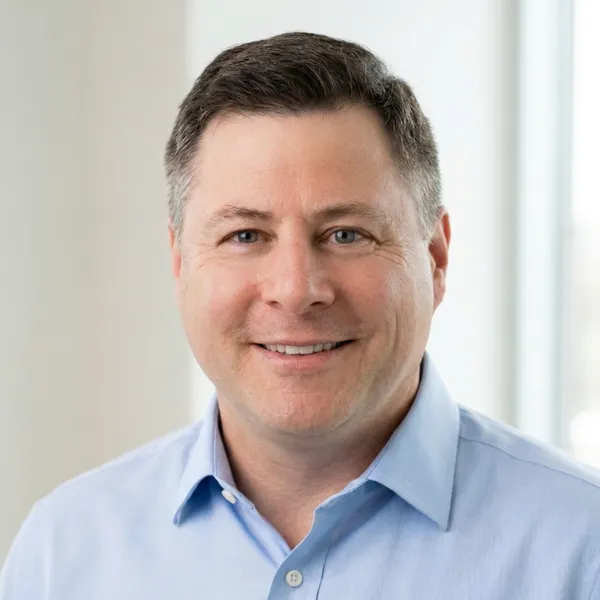 Laurent, founder and CTOA developer, then a lead, then a CTO. Started in the IT departments of French media, telecoms and banking, founded Coeur du Web in 2019. He runs the fractional CTO and interim engagements himself.
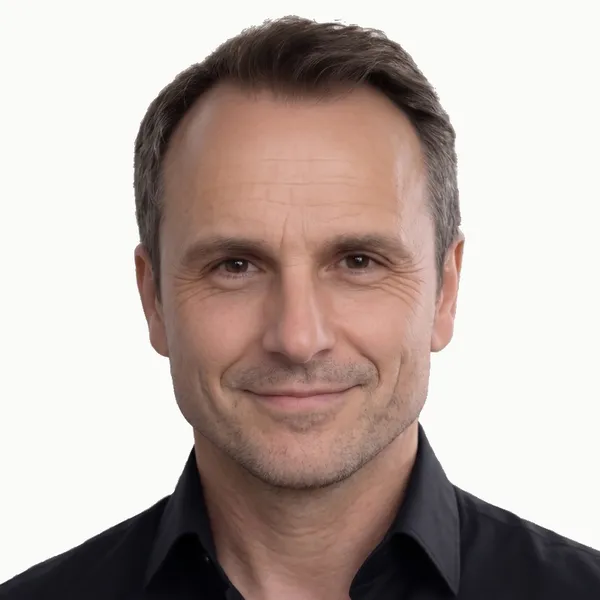 David, frontend leadInterface and front-end architecture, from a single component to a design system. Laurent’s partner for more than twenty years: when a product is still pleasant to use two years in, that is his work showing.
 Clairmont, technical leadArchitecture, backend, infrastructure, integrations. Full time with us for four years; on sensitive migrations he structures the technical answer, alongside Laurent or owning the scope outright.

Your advice and your build come from the same people.
We advise and we build. A consultancy that never ships can recommend anything; we cannot, because we are the ones who then have to make it work. The same engineers scope your engagement, sign it, write the code and hand it over.
Our advice has to survive the implementation, because we are the implementation.
See the servicesFive answers, including where we are the wrong choice.
You are in Paris. How does that work for a UK or US company?
London and Dublin are one hour behind Paris, so a UK or Irish team works the same day we do. The US East Coast is six hours behind and the West Coast nine, so our afternoon is your morning. That overlap is real working time, and it is when decision calls happen.
What it costs a US team is that an afternoon question gets answered the next morning. For a fractional engagement built on scheduled sessions, that is usually a non-issue.
For work that needs someone reachable at 4pm Pacific, it is a real limitation and you should weigh it.
Three people. What happens if one of you is unavailable?
Documentation is mandatory at every stage of an engagement, precisely so that continuity does not depend on one person being reachable. On high-criticality work, two of us are assigned rather than one.
We also cap how many engagements run in parallel, contractually, before signing, and we turn work down rather than dilute what is already committed.
Why hire a French firm rather than one at home?
Only for reasons that survive scrutiny:
- If your customers, staff or data are in Europe, the rules that govern them are the ones we build under every day: EU hosting, a data processing agreement from the first contract, logs an auditor can read.
- The senior people do the work rather than front it.
- The engagements are fixed fee with the risk on our side.
- Several of our references are public institutions, so they are verifiable.
If what you need is a team on the US West Coast with US client references, we are not it, and we will say so in the first conversation.
Do you work in English day to day?
Yes, in writing and on calls. Documentation, code, commit messages and specifications are produced in English on English-language engagements. Our accents will be audible. Our written English will be clear, which for technical documentation is the part that matters.
Are you a development agency or a consultancy?
Both, and that is deliberate rather than a hedge. We advise and we build, which means our advice has to survive the implementation. A consultancy that never ships can recommend anything. We cannot, because we are the ones who then have to make it work.
20 minutes to meet the people who would do the work.
Tell us about your project. We will say plainly whether we can help, and if the honest answer is that someone else fits better, that is what you will hear.