Skip to content

Software, automations and AI, built under European rules. And the code is yours.

Custom software, n8n, private LLMs and a fractional CTO, for companies with customers or data in Europe.

Fixed fee: the price is set before work starts, and any overrun is ours.

Do you need the tool built, or the decision made?

Find your situation: each one leads to the service that answers it.

Build and automate

Software, automations and AI hosted in the EU, sources in your name.

Our EU customers ask where our AI sends their data.

  1. Your AI calls a model.
  2. A customer asks where it runs.
  3. With us: in the EU, logged.
AI under GDPR and the AI Act

Your auditor's questions are answered by the architecture: where data runs, what is logged, who oversees.

Our documents can’t go to a US API.

Private LLM and RAG

Your people get answers from your own documents, with sources, without sending them to a US API.

All 5 services in this group

Lead and modernize

Someone senior to decide, on a bounded mandate.

A vendor who stopped

Our vendor went quiet, and still has the code.

Software project rescue

Your code, your accounts and your project back under your control, and moving again.

A software product to move forward

We have a product, and no senior technical lead.

Fractional CTO

Your software product moves again: architecture, technical hires and migrations decided.

The starting point, fixed price

We are about to commit a budget, blind.

Technical due diligence

You know where you stand, what each option costs and in which order to act. Fixed price.

All 9 services in this group

Buying from another vendor? Requirements and vendor selection, on your side of the table. All fourteen services, group by group

One customer, typed four times. Then once.

What a workflow between your applications changes. Drag the handle to compare.Tap After to see it.

Each entry typed twice costs hours. The estimator counts them.

Three engagements, before and after.

Aerial view of a market district in Yaoundé, Cameroon, the city the addressing base describes
100%platform availability over the length of the program

Expertise France, in Cameroon

Before
A country to equip with a sovereign addressing base, and nothing equivalent on the market.
After
The addressing base in production and the urban platform being delivered, a local project manager and two developers trained, the sources handed over.
The engagement in detail
The Liège tramway in service along the river Meuse
3000resident reports, across 24 municipalities

Liège, the tramway works

Before
No structured way for residents to report what years of works were doing to their street.
After
One geolocated entry point that routes each report to the right team.
The works in detail
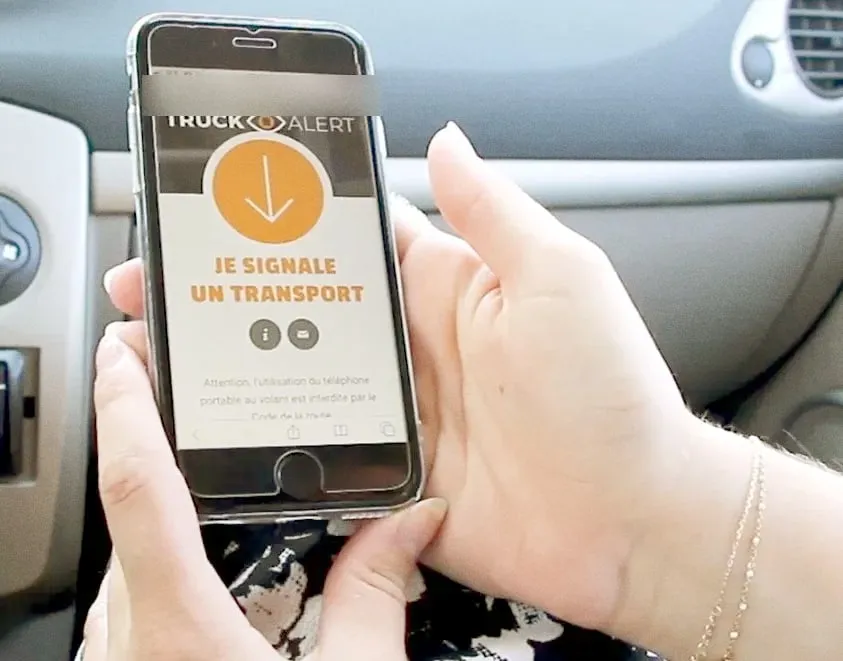
A hand holding a phone with TruckAlert open on its report screen

Welfarm, animal welfare NGO

Before
No available tool covered the whole need: reporting transports in a heatwave, aggregating for the Ministry, alerting citizens.
After
TruckAlert: structured field reports across France, and local alerts to citizens in a heatwave.
TruckAlert in detail

A few of the organizations we have delivered for: a multinational, a public engineering agency, a government ministry, a marketing leader, a Belgian transport operator, a luxury house.

“What struck me was the way he framed things. On issues where many people arrive with a solution straight away, he started by clarifying the need and writing it down.”

Cyprien M., M&A project manager. Two years alongside Laurent in CFAO’s IT department. Translated from French.The original, on LinkedIn (opens in a new tab)The CFAO engagement
  • Laurent Tulpan, founder of Coeur du WebLaurent
  • David, frontend leadDavid
  • Clairmont, technical leadClairmont

Laurent Tulpan scopes and runs every engagement. David and Clairmont build.

What you sign, in four lines.

Each commitment is written into our terms, with its limit next to it: a commitment whose limit goes unsaid is a sales pitch.

  1. An overrun is not invoiced to you.

    Scope, schedule and price are set before signature. If the real effort exceeds our estimate, the gap is ours.

    Limit A new requirement is not an overrun: it is priced separately, and you are free to refuse it.

  2. Your team runs it without us.

    Architecture documentation, one of your people trained during the engagement rather than in its final week, and a decision log. Measured in July 2026, across every engagement delivered since 2019: no client has had to call us back on an emergency after handover.

    Limit Handover needs someone available on your side to be trained.

  3. You work with the team that delivers.

    Laurent Tulpan scopes and runs every engagement. David and Clairmont build. The people on each engagement are named in the quote, and any replacement is proposed to you in writing. Never a junior sold as a senior.

    Limit Two large engagements in parallel at most. Beyond that, we turn work down and give a start date.

  4. You know the price before you sign.

    Set in the quote before any commitment, with no day rate. Two published exceptions: a two- or three-day expert audit, billed by the day because it is exploratory, and a procurement framework that only admits time and materials, with a written cap. That expert audit is not the technical due diligence, which has a fixed price.

    Limit A fixed price commits us on the deliverable, not on a business result: not revenue, not adoption.

Also in every contract: where data moves, backups, checks and a rollback plan are written before work starts, and data lost through something we did is restored at our expense. On delivery and payment in full, you own the source code, the content and the credentials to every third-party tool. Ownership, not a license.

The four commitments unfolded, with governing law and who pays the overrun

Know where you stand, before you talk to anyone.

Both tools run in your browser: nothing reaches us unless you ask for the written analysis.

Free tool, 2 minutesIs your IT holding your growth back?Twelve questions to tick, an immediate verdict, no sign-up.Start the twelve questions
01DependenciesCritical signals
02Wasted time
03Governance

Your score

0/ 12 weakness signals

Risk level: Waiting for your answers

Tick what sounds like you. The verdict updates as you go.

Unticked boxes are not verified points. This is a self-assessment, not a security audit.

How to read your score

0-2 signals

Your level

Few signals

Few weaknesses declared, outside any critical alert. Your systems hold up on these twelve points, and this is the right moment to structure a plan. A twelve-question self-assessment is not enough to conclude there is no risk.

3-5 signals

Your level

Amber zone

Your systems are starting to slow you down: a few dependencies and some wasted time accumulating. Prioritizing two or three pieces of work usually reverses the trend.

6-8 signals

Your level

Red zone

Several structural weaknesses are compounding: your growth rests on things that can give way. Serious scoping is warranted before stacking new tools on top.

9-12 signals

Your level

Alert

At this level the systems are no longer a support function, they are an operating risk. The good news is that starting from here, the first work pays back fast.

Levels follow the number of boxes ticked, with one exception: the Dependencies axis. Each of its signals raises the floor, whatever the total: one is enough for the amber zone, two for the red zone, three for alert.

Get the detailed reading of your score

You get an email straight away with the reading of each axis, the overall verdict and the axis to start with, generated from your own answers. One email. No newsletter behind it, no automated follow-up sequence. And if you reply to it, a human reads it.

Your details are used to reply to you and nothing else. No resale, no automated sequence. Privacy notice.

Free tool, instant resultHow many hours could automation give your team back?Your own numbers, projected in hours a month and person-days a year.Run the numbers

What buyers outside France ask first.

Does the EU AI Act apply to a US or UK company?

Often, yes. Article 2 of Regulation (EU) 2024/1689 covers providers that place an AI system on the EU market wherever they are established, and providers and deployers outside the EU when the output of the system is used in the Union. A US software company with European customers, or a UK firm whose AI tool screens European candidates, is usually in scope. What it owes depends on the use case: most business uses carry transparency duties, a few are high-risk, and some are banned outright.

What does a first engagement cost?

Only one price is published: the technical due diligence that opens most engagements, 2 to 5 days of work at 2000 € to 3000 € excluding VAT (value-added tax), credited in full if work follows. The engagement after it is priced from that document, never from a rate card, and the price is fixed before you sign.

You are in Paris. How does that work for a UK or US company?

London and Dublin are one hour behind Paris, so a UK or Irish team works our hours. The US East Coast is six hours behind and the West Coast nine: our afternoon is your morning, and that overlap is when decision calls happen. On English-language engagements, documentation, code and specifications are written in English. If you need someone reachable at 4pm Pacific for incidents, a provider on your time zone is the better answer, and we will tell you so on the first video call.

20 minutes to know what to build, and where it should run.

Tell us what you need built or decided, and where your data and customers are. If someone else would serve you better, we will say so.