
Four products we still operate, so you can check we run software, not only deliver it.
For buyers who will depend on a system for years. We designed, built and run these ourselves. Three of the four are not something you can buy from outside France, and each one says so.
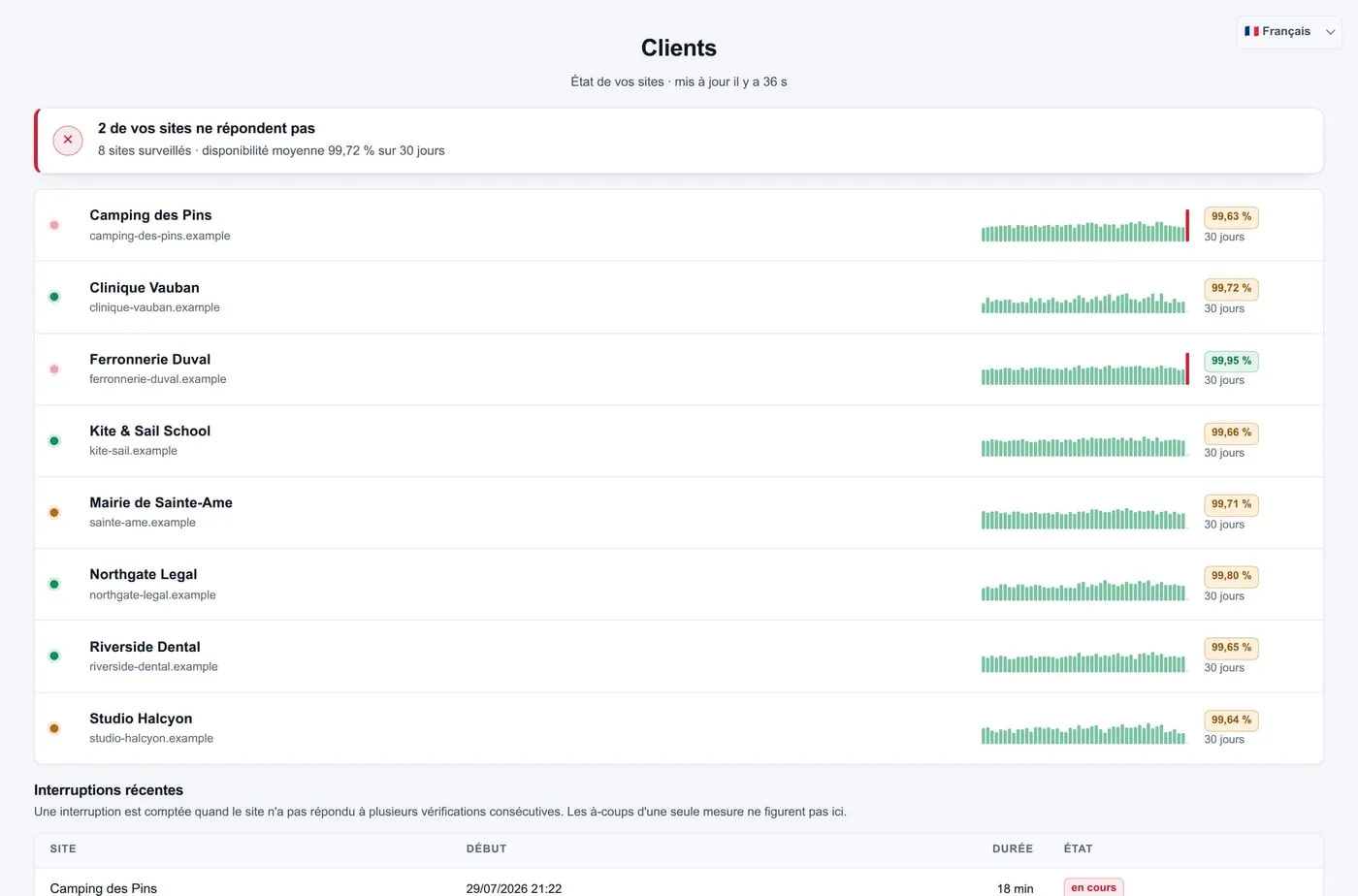
What you can do with each one today, before what it does.
One you can use today, one deployed program by program, one in production for sites under European rules, one still in private beta. That order tells you more than a feature list.
- You can use it today
UptimeEZ
Operations and monitoring
Monitoring that catches what an uptime check misses: a layout that broke, a database silently returning nothing behind a 200, a certificate that expired, a noindex tag left in production. Five layers, each of which has caught a real incident on our own systems.
What it tells you about us. We run it against our own client systems, so every false alert costs us directly. That is the only reliable incentive to make monitoring honest.
In production, source code public
- Deployed per program, not self-serve
BougeMaville
Public authorities and institutions
A geolocated field-reporting platform: residents or inspectors report what they see, reports go to whoever handles them, and the result becomes statistics an institution can act on. Built first for cities, then adapted for an industrial construction company, the Liège metropolitan area, Welfarm and Expertise France.
What it tells you about us. The same core has served four organizations with different rules, which is the hard part of a product. Adapting it is how Liège got a working system during its construction program rather than after it.
In production, constantly evolving
- In production
Refaudit
Compliance and accessibility
Automated audit of a website on three axes at once, regulatory compliance, security and accessibility, with the fixes proposed rather than just the problems listed.
What it tells you about us. It took two years to build, because a proposed fix has to be useful, not just plausible. Listing the problems is the easy half.
In production
- Private beta
Discoly
Media and online publishers
Google Discover optimization treated as an editorial discipline rather than a trick: continuous analysis, recommendations, measurement and editorial A/B testing.
What it tells you about us. Running with French-language publishers in a private beta, and labeled that way rather than dressed up as launched.
Private beta, for French-language publishers
What an alert you can trust looks like.
Real screens from the product we use on the systems we are responsible for. The interface is in French, the alerts are real.
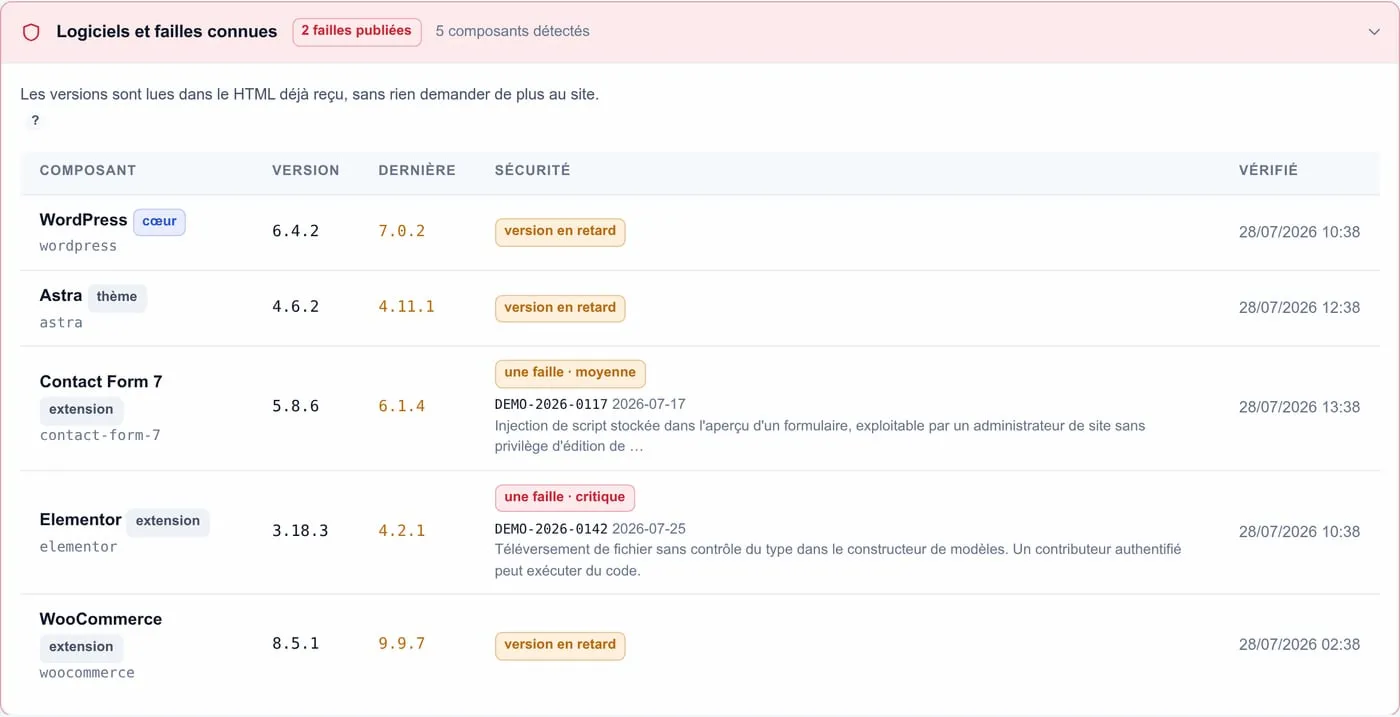
Known vulnerabilities in the components of a monitored site. 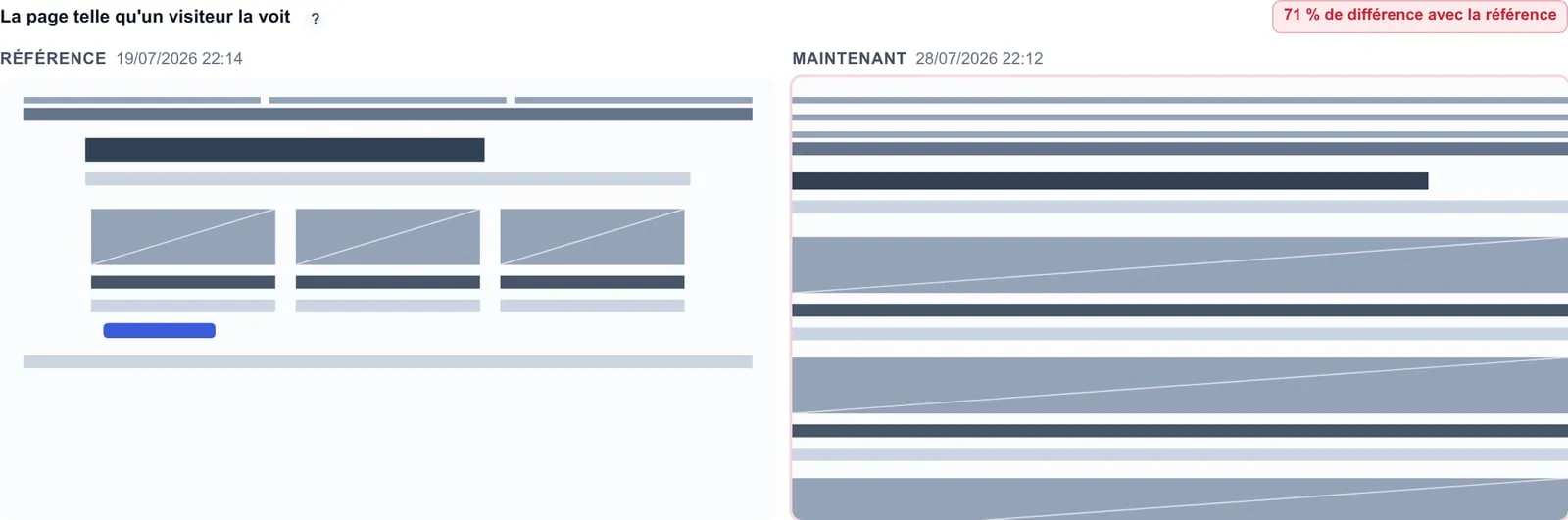
The page a visitor sees, compared with the last known good version. 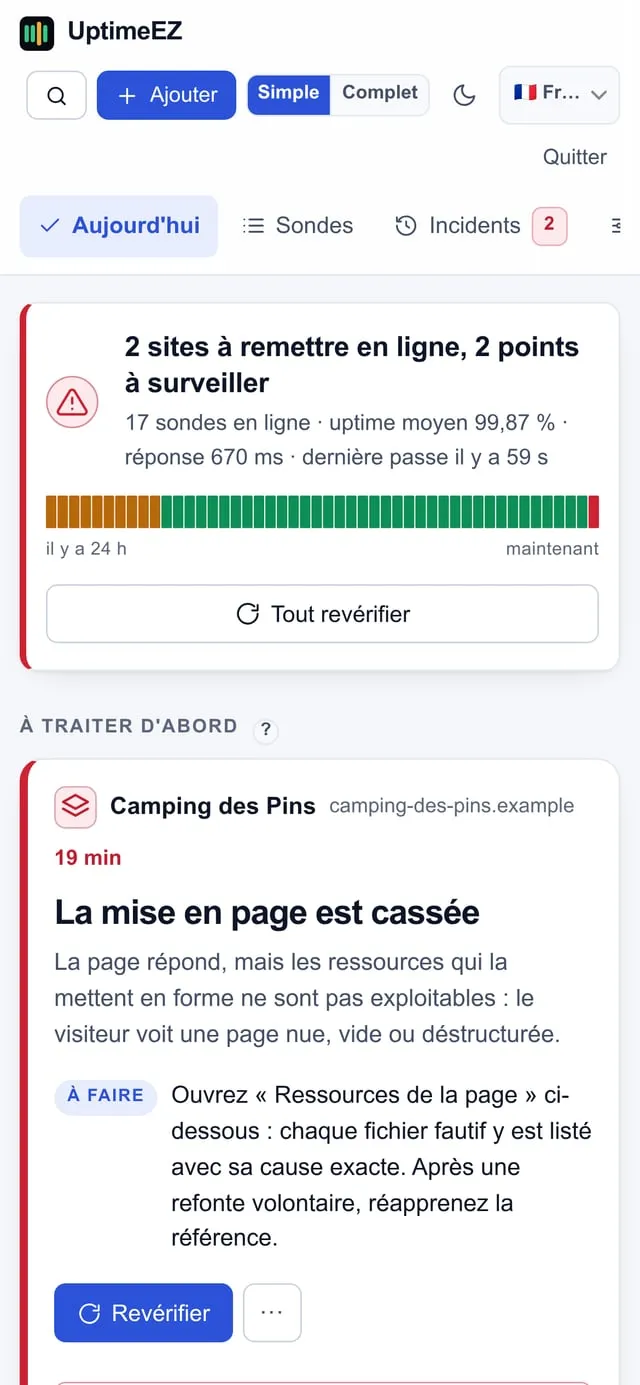
The same alerts on a phone, with the exact cause.
What running software teaches you.
None of this appears in a project plan. All of it decides whether the system we build for you still works in year three.
- An alert nobody trusts is worse than noneUptimeEZ exists because a monitoring tool was raising mostly false alerts, and the real one stopped being read. Every layer answers a failure that got past a plain uptime check.
- A product survives its second client, or it was a projectBougeMaville went from cities to four organizations with different rules. The discipline that took is what makes your tool survive a reorganization.
- A stage said plainly is a commitmentDiscoly is called a private beta on this page, not a product you can buy. How a vendor states its own uncomfortable stage predicts what it will tell you about yours.
What buyers ask about this page.
Can I buy any of these?
UptimeEZ, yes, and its source is public. BougeMaville is deployed per program rather than sold by the seat, because it has to be adapted to how an institution routes its reports.
Refaudit is in production. It checks a site against GDPR, WCAG (web content accessibility guidelines) and the European Accessibility Act, so it is most useful for a site with European users. Discoly is in private beta with French-language publishers, so it is unlikely to be what you came for.
Ask which one is relevant to you: the honest answer will often be none of them.
Then why is this page here?
Because a vendor who delivers projects and leaves is not the same as one who runs software in production and lives with the consequences.
Operating our own products taught us that an alert nobody trusts is worse than no alert, that a migration is judged on the restore and not the backup, and that a product survives its second client only if the first one did not hard-code the rules.
You are entitled to check that we practice what we sell.
Does running your own products take time away from client work?
It would if we ran them as a growth business, and we do not. They are small, deliberately, and two of the four exist because a client engagement needed them first.
What they cost in attention they return in judgment: most of what we know about operating software with a small team, we learned by having to do it ourselves at three in the morning.
Would you build a product for us?
That is a real engagement, and not the same as building an internal tool: a product needs someone on your side to own its direction after we leave, and that person has to exist before we start.
We have done it on a fixed fee, with the source code and the operating documentation transferred at the end. We will not start without that owner identified, because the result would be a system nobody drives.
20 minutes, and a straight answer about your system.
Describe what is happening on your side. If one of these products is relevant we will say so. If none is, which is the likely answer, we will talk about the engagement instead.